
Music has the unique ability to connect people beyond words. Within National Disability Insurance Scheme (NDIS) programs, music therapy is increasingly recognised as a powerful, evidence-based approach that supports emotional wellbeing, cognitive development, and social engagement. When delivered by a trusted NDIS services in Brisbane, music therapy becomes a valuable tool for helping participants achieve their personal goals and improve their quality of life.
What Is Music Therapy in NDIS Programs?
Music therapy is a structured therapeutic intervention delivered by qualified professionals who use music to address individual needs. It is not about musical talent or performance; instead, it focuses on participation, expression, and connection. Activities may include singing, playing instruments, movement to music, songwriting, and listening exercises, all tailored to the participant’s abilities and goals.
Under NDIS plans, music therapy can support participants across different age groups and disability types, including autism spectrum disorder, intellectual disabilities, psychosocial disabilities, and physical impairments.
Emotional Wellbeing Through Music
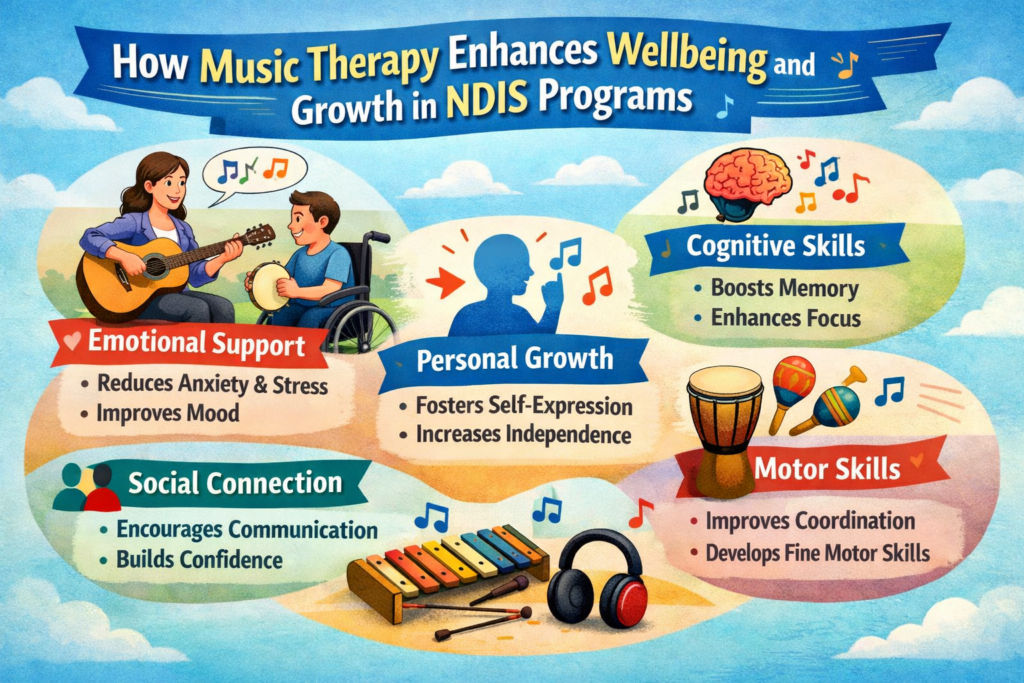
One of the most significant benefits of music therapy is emotional regulation. Music provides a safe, non-verbal way for participants to express feelings such as stress, anxiety, frustration, or joy. Rhythm and melody can help calm the nervous system, improve mood, and reduce emotional distress.
A NDIS Provider Brisbane ensures music therapy sessions are personalised, helping participants develop coping strategies and emotional awareness. Over time, this can lead to increased confidence, improved self-esteem, and greater emotional resilience in daily life.
Supporting Communication and Social Skills
For individuals who face challenges with speech or social interaction, music therapy can act as a bridge to communication. Musical activities naturally encourage turn-taking, listening, eye contact, and shared attention. Songs and rhythms can also support language development and improve verbal and non-verbal communication skills.
Group music therapy sessions offered by a trusted NDIS provider in Brisbane promote social inclusion by creating opportunities for participants to interact, collaborate, and form meaningful connections with others in a supportive environment.
Cognitive and Developmental Growth
Music therapy engages multiple areas of the brain simultaneously, making it a powerful tool for cognitive development. It can enhance memory, attention, problem-solving, and motor coordination. Structured musical patterns help participants improve sequencing skills and focus, which are essential for learning and everyday functioning.
For children and young adults, music therapy supports developmental milestones, while for adults, it can help maintain cognitive abilities and encourage lifelong learning.
Physical Benefits and Motor Skills
Music therapy also plays an important role in physical development. Movement to music can improve balance, coordination, and muscle strength. Instrument play enhances fine motor skills, hand-eye coordination, and sensory processing.
A trusted NDIS Provider Brisbane integrates music therapy with participants’ broader support plans, ensuring physical goals align with therapeutic outcomes and personal interests.
Personalised, Goal-Focused Support
What makes music therapy especially effective within NDIS programs is its flexibility and participant-centred approach. Sessions are designed to align with individual NDIS goals, whether those goals focus on independence, social participation, emotional wellbeing, or skill development.
By working with a trusted NDIS provider in Brisbane, participants and families can be confident that music therapy is delivered ethically, professionally, and in line with NDIS guidelines.
Conclusion
Music therapy is more than an enjoyable activity—it is a transformative therapeutic approach that nurtures wellbeing, growth, and connection. When delivered by a trusted NDIS Provider Brisbane, music therapy empowers participants to express themselves, build skills, and engage more fully with the world around them. As part of a holistic NDIS support plan, music therapy continues to play a vital role in enhancing lives and unlocking potential.